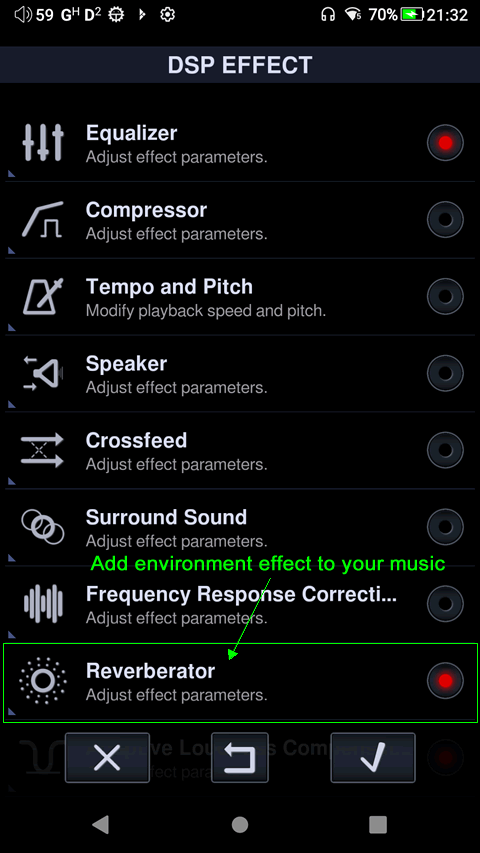
Why & when to use the Reverberator DSP
If you mostly listen on IEMs or closed-back headphones, studio-isolated recordings can occasionally feel overly dry or fatiguing due to the "in-your-head" localization. Because Neutron's Reverberator DSP adheres to the I3DL2 (Interactive 3D Audio Rendering Guidelines) standard, it models realistic acoustic reflections and spatial decay rather than applying a basic echo.
Here is where it comes in handy:
-
Opening up dry studio mixes: Older masters, solo acoustic tracks, or clinical recordings can benefit from subtle room ambiance to add warmth and depth.
-
Customizing soundstage on headphones: Pair it with Crossfeed (or use it standalone) to simulate a treated listening room, small jazz club, or concert hall.
-
Genre-specific tuning: Use the included presets to quickly match the acoustic space to what you're listening to—whether that's orchestral music, live recordings, or ambient electronic tracks.